po3mah reviewed Fahrenheit 451 by Ray Bradbury
why i didn't read it before
5 stars
It's like it was written today. Spoiler: Protect books at all costs.
It's like it was written today. Spoiler: Protect books at all costs.
a temperatura na qual o papel fogo e queima do livro pega fogo e queima –
Epub
Portuguese language
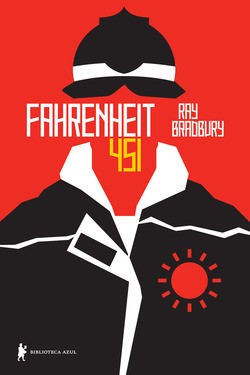
Published Aug. 6, 2012 by Biblioteca Azul.
Escrito após o término da Segunda Guerra Mundial, em 1953, Fahrenheit 451, de Ray Bradubury, revolucionou a literatura com um texto que condena não só a opressão anti-intelectual nazista, mas principalmente o cenário dos anos 1950, revelando sua apreensão numa sociedade opressiva e comandada pelo autoritarismo do mundo pós-guerra. Agora, o título de Bradbury, que morreu recentemente, em 6 de junho de 2012, ganhou nova edição pela Biblioteca Azul, selo de alta literatura e clássicos da Globo Livros, e atualização para a nova ortografia.
A singularidade da obra de Bradbury, se comparada a outras distopias, como Admirável Mundo Novo, de Aldous Huxley, ou 1984, de George Orwell, é perceber uma forma muito mais sutil de totalitarismo, uma que não se liga somente aos regimes que tomaram conta da Europa em meados do século passado. Trata-se da “indústria cultural, a sociedade de consumo e seu corolário ético – a moral …
Escrito após o término da Segunda Guerra Mundial, em 1953, Fahrenheit 451, de Ray Bradubury, revolucionou a literatura com um texto que condena não só a opressão anti-intelectual nazista, mas principalmente o cenário dos anos 1950, revelando sua apreensão numa sociedade opressiva e comandada pelo autoritarismo do mundo pós-guerra. Agora, o título de Bradbury, que morreu recentemente, em 6 de junho de 2012, ganhou nova edição pela Biblioteca Azul, selo de alta literatura e clássicos da Globo Livros, e atualização para a nova ortografia.
A singularidade da obra de Bradbury, se comparada a outras distopias, como Admirável Mundo Novo, de Aldous Huxley, ou 1984, de George Orwell, é perceber uma forma muito mais sutil de totalitarismo, uma que não se liga somente aos regimes que tomaram conta da Europa em meados do século passado. Trata-se da “indústria cultural, a sociedade de consumo e seu corolário ético – a moral do senso comum”, segundo as palavras do jornalista Manuel da Costa Pinto, que assina o prefácio da obra. Graças a esta percepção, Fahrenheit 451 continua uma narrativa atual, alvo de estudos e reflexões constantes.
O livro descreve um governo totalitário, num futuro incerto, mas próximo, que proíbe qualquer livro ou tipo de leitura, prevendo que o povo possa ficar instruído e se rebelar contra o status quo. Tudo é controlado e as pessoas só têm conhecimento dos fatos por aparelhos de TVs instalados em suas casas ou em praças ao ar livre. A leitura deixou de ser meio para aquisição de conhecimento crítico e tornou-se tão instrumental quanto a vida dos cidadãos, suficiente apenas para que saibam ler manuais e operar aparelhos.
Fahrenheit 451 tornou-se um clássico não só na literatura, mas também no cinema. Em 1966, o diretor François Truffaut adaptou o livro e lançou o filme de mesmo nome estrelado por Oskar Werner e Julie Christie.
source: globolivros.globo.com/livros/fahrenheit-451
It's like it was written today. Spoiler: Protect books at all costs.
It's like it was written today. Spoiler: Protect books at all costs.
It's like it was written today. Spoiler: Protect books at all costs.
It's like it was written today. Spoiler: Protect books at all costs.
As you're reading this book, it's difficult to remember that it was written in 1951. The technological "predictions" are interesting (bluetooth headphones, reality TV). But I think the most interesting portions are the discussions of the nature of books and media. Toward the end, we get a discussion of people as books (using their innate photographic memories to read/scan books that can later be retrieved from them), but this quotation from Faber around the middle of the book is probably my favorite moment...the texture of books, a texture that can be examined closely, and the rewards of that process of examination.
"Do you know why books such as this are so important? Because they have quality. And what does the word quality mean? To me, it means texture. This book as pores. It has features. This book can go under the microscope. You'd find life under the glass, …
As you're reading this book, it's difficult to remember that it was written in 1951. The technological "predictions" are interesting (bluetooth headphones, reality TV). But I think the most interesting portions are the discussions of the nature of books and media. Toward the end, we get a discussion of people as books (using their innate photographic memories to read/scan books that can later be retrieved from them), but this quotation from Faber around the middle of the book is probably my favorite moment...the texture of books, a texture that can be examined closely, and the rewards of that process of examination.
"Do you know why books such as this are so important? Because they have quality. And what does the word quality mean? To me, it means texture. This book as pores. It has features. This book can go under the microscope. You'd find life under the glass, streaming past in infinite profusion. The more pores, the more truthfully recorded details of life per square inch you can get on a sheet of paper, the more 'literary' you are. That's my definition, anyway. Telling detail. Fresh detail." (79)