po3mah reviewed Fahrenheit 451 by Ray Bradbury
why i didn't read it before
5 stars
It's like it was written today. Spoiler: Protect books at all costs.
It's like it was written today. Spoiler: Protect books at all costs.
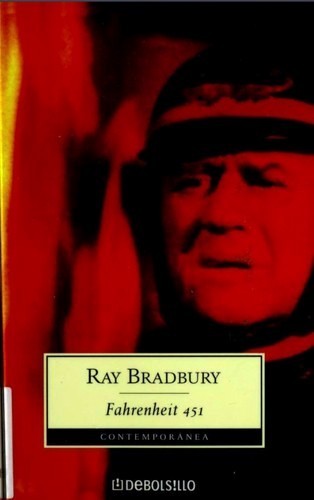
Paperback, 175 pages
Spanish language
Published Aug. 6, 2004 by Debolsillo.
Fahrenheit 451 ofrece la historia de un extraño y horroroso futuro. Montag, el protagonista, pertenece a una extraña brigada de bomberos, cuya misión, paradójicamente, no es la de sofocar incendios sino la de provocarlos, para quemar libros. Porque en el país de Montag está terminantemente prohibido leer. Porque leer obliga a pensar, y en el país de Montag está prohibido pensar. Porque leer impide ser feliz, y en el país de Montag hay que ser feliz a la fuerza... La novela más célebre de Ray Bradbury, maestro de la ciencia ficción. --back cover
Fahrenheit 451 ofrece la historia de un extraño y horroroso futuro. Montag, el protagonista, pertenece a una extraña brigada de bomberos, cuya misión, paradójicamente, no es la de sofocar incendios sino la de provocarlos, para quemar libros. Porque en el país de Montag está terminantemente prohibido leer. Porque leer obliga a pensar, y en el país de Montag está prohibido pensar. Porque leer impide ser feliz, y en el país de Montag hay que ser feliz a la fuerza... La novela más célebre de Ray Bradbury, maestro de la ciencia ficción. --back cover
It's like it was written today. Spoiler: Protect books at all costs.
It's like it was written today. Spoiler: Protect books at all costs.
It's like it was written today. Spoiler: Protect books at all costs.
It's like it was written today. Spoiler: Protect books at all costs.
As you're reading this book, it's difficult to remember that it was written in 1951. The technological "predictions" are interesting (bluetooth headphones, reality TV). But I think the most interesting portions are the discussions of the nature of books and media. Toward the end, we get a discussion of people as books (using their innate photographic memories to read/scan books that can later be retrieved from them), but this quotation from Faber around the middle of the book is probably my favorite moment...the texture of books, a texture that can be examined closely, and the rewards of that process of examination.
"Do you know why books such as this are so important? Because they have quality. And what does the word quality mean? To me, it means texture. This book as pores. It has features. This book can go under the microscope. You'd find life under the glass, …
As you're reading this book, it's difficult to remember that it was written in 1951. The technological "predictions" are interesting (bluetooth headphones, reality TV). But I think the most interesting portions are the discussions of the nature of books and media. Toward the end, we get a discussion of people as books (using their innate photographic memories to read/scan books that can later be retrieved from them), but this quotation from Faber around the middle of the book is probably my favorite moment...the texture of books, a texture that can be examined closely, and the rewards of that process of examination.
"Do you know why books such as this are so important? Because they have quality. And what does the word quality mean? To me, it means texture. This book as pores. It has features. This book can go under the microscope. You'd find life under the glass, streaming past in infinite profusion. The more pores, the more truthfully recorded details of life per square inch you can get on a sheet of paper, the more 'literary' you are. That's my definition, anyway. Telling detail. Fresh detail." (79)